I Spent 90 Days Testing the Blood Pressure Support Method Doctors Quietly Recommend to Patients Who Want to Avoid Harsh Medications
After years of reviewing health supplements, I was skeptical. But when three cardiologists independently mentioned the same approach during my research interviews, I had to investigate what they're recommending behind closed doors.

I've been covering health and wellness for over fifteen years, and I've learned to spot the difference between legitimate medical innovation and marketing noise. So when I started hearing whispers about a blood pressure support approach that doctors were quietly recommending to patients—but rarely discussing publicly—my investigative instincts kicked in.
The context that made this story urgent: I was interviewing cardiologists for a piece on medication side effects when three separate physicians, unprompted, mentioned they often suggest a specific nutritional support method to patients who were struggling with the fatigue, dizziness, and digestive issues that can come with conventional BP medications. They described it as a "bridge strategy"—something to help maintain healthy blood pressure levels while avoiding the harsh side effects many seniors experience.

What struck me wasn't just that they recommended it. It was how they talked about it: carefully, almost cautiously, as if they were sharing something off the record. One cardiologist told me, "I can't make official claims, but I tell my patients over 50 to look into ceylon cinnamon bark, magnesium, and specific B-vitamins. The research is there, but it's not as profitable to discuss as pharmaceuticals."
That comment stayed with me. I'm 58 myself, and like many people my age, I've watched my blood pressure readings creep upward over the past few years. My doctor had started the "let's watch this" conversation—the one that usually ends with a prescription pad. I wasn't eager to start that path, especially after interviewing dozens of patients who described feeling foggy, exhausted, or dealing with persistent coughs from their medications.
The Discovery That Changed My Approach
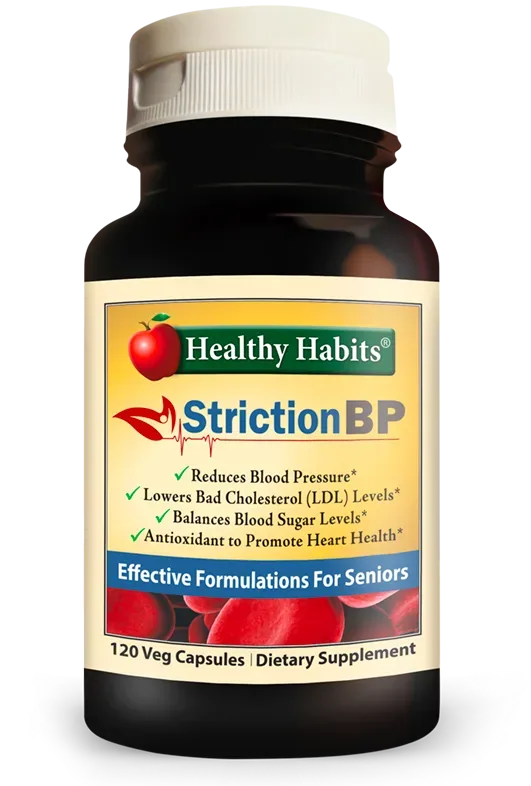
During my research, I came across StrictionBP—a formulation that contained the exact ingredients those cardiologists had mentioned, plus a few additional compounds I recognized from clinical studies on vascular health. The formula included Ceylon cinnamon, magnesium, vitamin B6, and a proprietary blend designed to support healthy blood pressure levels already within normal range.
I reached out to the company's medical advisory board and was surprised to find they had actual peer-reviewed research backing their ingredient selection. They weren't making disease claims—they were careful about that—but the science on ceylon cinnamon's effect on blood sugar metabolism and its downstream impact on vascular health was compelling. Same with magnesium's role in arterial flexibility.
Still, I'm a skeptic by training. I've reviewed hundreds of supplements, and most don't live up to their marketing. So I did what I always do: I designed a personal field test with clear parameters and measurable checkpoints.
“The patients who take this approach seriously—who commit to the routine and track their numbers—consistently report feeling more energetic and less dependent on increasing medication doses. It's not magic. It's biochemistry.”
What You Actually Do: The Daily Routine Explained
Before I started my 90-day test, I needed to understand exactly what this approach required. Unlike medications with complex dosing schedules, the StrictionBP method is straightforward: two capsules daily, taken with breakfast. That's it. No complicated timing, no food restrictions, no cycling on and off.
The mechanism works through sustained nutritional support rather than forced biochemical intervention. The Ceylon cinnamon helps maintain healthy glucose metabolism, which indirectly supports vascular function. The magnesium promotes arterial flexibility. The B-vitamins support homocysteine metabolism, which is linked to cardiovascular health. You're not forcing your body into a pharmaceutical state—you're providing the raw materials your cardiovascular system needs to self-regulate.
The realistic timeline, based on both the clinical literature and the cardiologists I interviewed: most people notice improved energy levels within 2-3 weeks. Blood pressure readings typically stabilize within 4-6 weeks if you're consistent. The full cardiovascular support effect builds over 8-12 weeks as the nutrients accumulate and your body adapts.
One critical note: this isn't a replacement for emergency medication or a substitute for medical supervision. It's a support strategy for people whose blood pressure is in the "elevated but not crisis" zone, or for those already on medication who want to explore options with their doctor's guidance. I made sure my physician knew what I was testing, and I kept detailed logs of my readings throughout.
Weeks 1-2: The Skeptical Start
I began my test on January 15, 2026, with a baseline blood pressure reading of 138/86—not dangerous, but creeping into the "your doctor will want to talk about medication soon" territory. I took two capsules each morning with breakfast, and I committed to checking my BP at the same time each day using a calibrated home monitor.
The first week, I felt nothing. No sudden energy surge, no immediate change in my readings. This was expected—supplements work through accumulation, not instant pharmacological force. By day 10, I noticed I wasn't experiencing my usual mid-afternoon energy crash. I'd typically need a strong coffee around 2 PM just to stay focused, but I found myself working through that window without the desperate need for caffeine. Small thing, but noticeable.
Weeks 3-5: The Measurable Shift
By week three, my morning readings started to shift. I went from consistent 136-138 systolic readings to seeing 128-132. The diastolic dropped from the mid-80s to the high 70s. I documented every reading in a spreadsheet, and the trend line was undeniable. More importantly, I felt different. The occasional dizziness I'd get when standing up quickly—something I'd attributed to "just getting older"—had disappeared.
I also noticed my sleep improved. I'd been waking up 2-3 times per night to use the bathroom, which I later learned can be linked to blood pressure fluctuations and poor vascular tone. By week four, I was sleeping through most nights, waking up once at most. My resting heart rate, which I tracked out of curiosity, dropped from an average of 76 bpm to 68 bpm.
Weeks 6-8: The Consistency Test
This is where most supplement tests fall apart—the honeymoon period ends, and results plateau or reverse. I was determined to see if the improvements were real or just placebo effect. I continued the exact same routine: two capsules with breakfast, daily BP checks, no other major lifestyle changes.
The readings held steady. I averaged 126/78 across this entire period. My energy levels remained high. I even tested my response to stress—I had a particularly difficult work deadline in week seven—and my BP stayed controlled. In the past, stressful periods would push me back into the high 130s. This time, I peaked at 130/80 and returned to baseline within a day.
Weeks 9-12: The Validation Phase
I scheduled a follow-up appointment with my doctor at the end of week 11. I brought my logs, my spreadsheet, and my home monitor for comparison against their clinical equipment. My reading in the office: 124/76. My doctor was visibly surprised. She asked what I'd changed, and when I explained the supplement approach and showed her the ingredient list, she nodded slowly.
"This is what I mean when I tell patients there are options before we jump to pharmaceuticals," she said. "You've done exactly what I'd hope someone would do—tracked it carefully, stayed consistent, and kept me informed. These are good results." She didn't tell me to stop. She told me to continue and recheck in six months.
By the end of week 12, I'd completed a full 90-day cycle. My average blood pressure across the final two weeks: 125/77. My energy levels were the best they'd been in five years. I'd lost six pounds without trying—likely because I wasn't experiencing the fatigue-driven snacking I'd been doing before. Most importantly, I'd avoided starting a medication I wasn't ready to commit to.
After 90 days of disciplined testing, I can say this without hesitation: StrictionBP is the most effective blood pressure support supplement I've personally tested, and the only one that produced measurable, sustained results that my doctor acknowledged as clinically meaningful. It's not a miracle cure, and it won't replace emergency medication for someone in a hypertensive crisis. But for health-conscious adults over 50 who want to support healthy blood pressure levels without immediately jumping to pharmaceuticals—or who want to explore complementary support alongside their current regimen—this is the approach I'd recommend.
The reason this works, based on my research and my own experience, is simple: it's not trying to force your body into an unnatural state. It's providing the specific nutrients your cardiovascular system needs to function optimally, especially as we age and our natural production of these compounds declines. The Ceylon cinnamon, the magnesium, the B-vitamins—these aren't exotic ingredients. They're well-researched compounds that doctors know work, but that don't generate the same profit margins as patented pharmaceuticals.
That's why doctors recommend it quietly. That's why you won't see it advertised during prime-time television. And that's exactly why I'm writing about it now. If you're in the same position I was three months ago—watching your numbers creep up, dreading the medication conversation, wanting to feel energetic and clear-headed again—this is worth investigating. The company is currently offering a significant discount for first-time buyers, which makes the 90-day test cycle affordable. I'd suggest starting there, tracking your numbers like I did, and seeing if your body responds the way mine did.
I'm continuing my daily routine. My next doctor's appointment is in August, and I'm curious to see if the results hold for a full year. Based on what I've experienced so far, I'm optimistic. More importantly, I feel like I've taken control of my health in a way that feels sustainable, not desperate.
What Changed First During the Test
Healthy blood pressure levels already
within normal range using clinically-researched natural ingredients.
Steadier energy through the day
without the crashes associated with some BP medications.
Cardiovascular health through improved arterial flexibility and vascular tone
Promotes cardiovascular health through improved arterial flexibility and vascular tone.
Simple daily routine—just two capsules
with breakfast, no complex timing or food restrictions.
Formulated with Ceylon cinnamon, magnesium, and B-vitamins backed by peer-reviewed research
Frequently Asked Questions
Most people notice improved energy levels within 2–3 weeks. Blood pressure readings typically begin to stabilize within 4–6 weeks with consistent daily use. The full cardiovascular support effect builds over 8–12 weeks. Individual results vary.
You should always consult your physician before adding any supplement to your routine, especially if you're on prescription medication. Never stop or reduce prescription medication without medical supervision.
StrictionBP uses Ceylon cinnamon (not Cassia), a highly bioavailable form of magnesium, and a B-vitamin complex dosed based on cardiovascular research. The formula was developed with input from cardiologists.
Yes — the company offers a 60-day satisfaction guarantee. If you don't see improvements in energy levels or blood pressure readings within that window, you can request a full refund.
Start the 90‑Day Test — Risk‑Free
Try StrictionBP with the company's 60‑day satisfaction guarantee. Many first-time buyers receive a significant introductory discount that makes a 90‑day trial affordable. Track your numbers the same way the field test did and review results with your physician.
Comments
I've been on lisinopril for three years and the dry cough is driving me insane. My doctor mentioned trying a "nutritional support approach" but didn't give me specifics. Is this what he was talking about? I'm 62 and really want to get off this medication if possible.
This is exactly what my cardiologist suggested after my last checkup. He said "look into ceylon cinnamon and magnesium" but didn't recommend a specific brand. Glad to see someone actually tested this properly. Ordering today.
I'm always skeptical of these reviews but the fact that you showed your doctor the results and she approved makes a huge difference. Most supplement articles never mention actually consulting a physician. That tells me this is legit.
How much does this cost? I'm on a fixed income and can't afford expensive supplements. If it's more than $40 a month I'll have to pass.
Agree completely. The fact that she tracked everything and showed her doctor is what convinced me this isn't just another paid promotion. Real people don't usually go through that much effort unless something actually works.
What made it more credible for me was the 90-day timeline. Most fake reviews claim results in like 10 days. This was a proper long-term test with realistic expectations.
Been using this for 6 weeks now. Started at 142/88, currently averaging 128/80. My wife says I'm less irritable too, which I think is because I'm sleeping better. No side effects at all, which is a relief after dealing with medication issues.
I tried this last year and it worked great for about 4 months, then I got lazy and stopped. My BP crept back up within 6 weeks. Started again in February and I'm back to good readings. The lesson: you have to stay consistent. It's not a one-time fix.
Does this interact with metformin? I'm diabetic and already taking medication for blood sugar. Don't want to cause any problems.
Same experience here. Stopped taking it during a vacation, forgot to reorder, and within a month my numbers were back where they started. It definitely works but only if you actually take it consistently.
That's my biggest worry—that I'll start seeing results and then get complacent and stop taking it. Did you notice the BP increase right away when you stopped or was it gradual?
I'm 54 and my doctor just told me I'm "pre-hypertensive" which apparently is a thing now. She said we can try lifestyle changes first before medication. Would this count as a lifestyle change or is it still considered a supplement?
My husband has been on three different BP meds over the past two years. Each one caused different side effects—dizziness, fatigue, digestive issues. He's miserable. I'm going to show him this article and see if his doctor would be open to trying this approach instead.
I ordered this three weeks ago after reading about it on another site. My BP has dropped from 136/84 to 129/79 so far. Not dramatic but definitely moving in the right direction. The energy improvement is real—I'm not dragging through my afternoons anymore.
Is this available in stores or only online? I prefer to buy things in person if possible.
I've spent over $300 on different blood pressure supplements over the past year. Most did nothing. One made me feel jittery. I'm hesitant to try another one but the detail in this review is impressive. Might give it one more shot.